


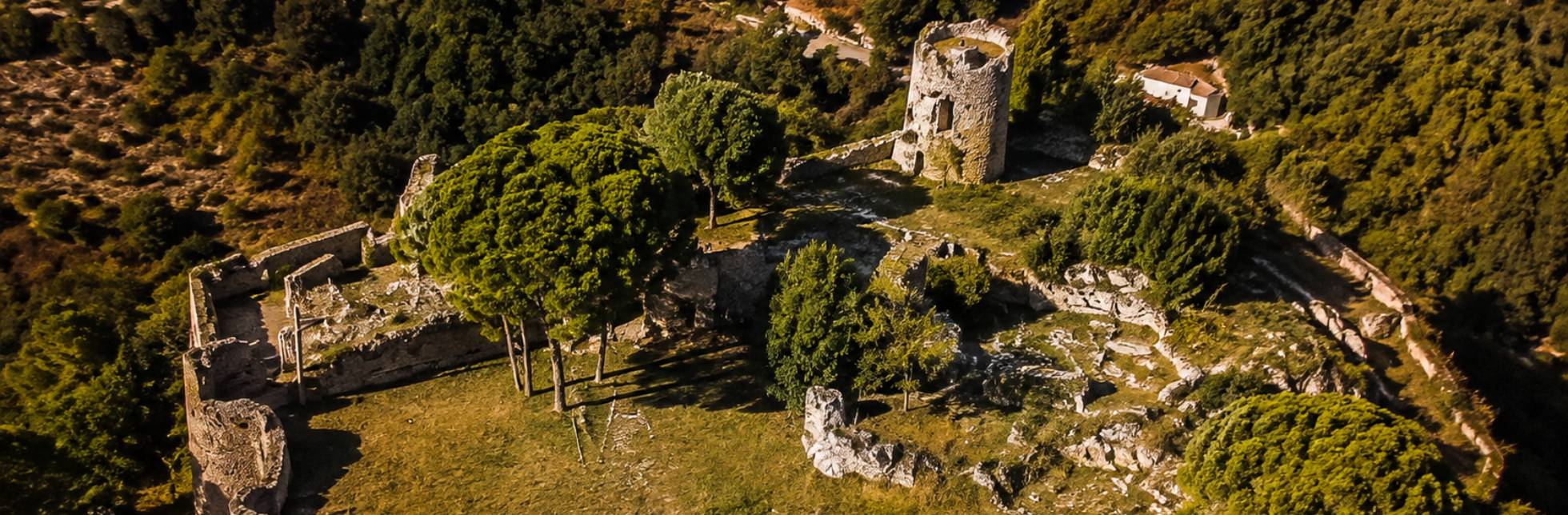
The Heart of Hérault and the Montpellier metropolitan area are home to four castles open to visitors, ranging from a medieval keep to 18th-century wine-growing folies. Just a few kilometers from our campsite in the Hérault, the Château des Guilhem has overlooked Clermont-l’Hérault since the 12th century. Further east, Castries, Flaugergues, and La Mogère round out this heritage route, featuring listed gardens and wine estates.
Here’s the history, prices, and practical tips for planning your castle tour in the Hérault.
Key points to remember
- The Heart of Hérault and the Montpellier metropolitan area are home to four castles open to visitors, ranging from medieval heritage sites to wine estates.
- The Château des Guilhem has overlooked Clermont-l’Hérault since 1158, about 4 km from our campsite at Lac du Salagou.
- The Château de Castries features a garden designed by André Le Nôtre and an aqueduct built by Pierre-Paul Riquet, both of which are protected as historic monuments.
- Flaugergues Castle, a 17th-century wine estate, is open to visitors only during scheduled guided tours.
- The Château de la Mogère, which has been designated a historic monument since 1945, opens its grounds for self-guided tours in the afternoons.
The Guilhem Castle, right next to the campsite
The Château des Guilhem has overlooked Clermont-l’Hérault since the 12th century, located about 4 km from our campsite at Lac du Salagou. It was first mentioned in 1158 in the cartulary of Gellone Abbey, and its current layout features eight semicircular towers surrounding a central keep, the Guilhem Tower. In 1584, the site withstood a four-day siege by the Duke of Montmorency, protecting the town’s population. Purchased by the municipality in 2020 after decades of partial abandonment, the castle reopened to the public on June 21, 2021, and now hosts medieval festivals and municipal events.
Our favorite activity: After touring the keep, our guests enjoy heading back down to Lake Salagou for a swim in the late afternoon. The low-angled sunlight glinting off the red earth from the castle ramparts offers one of the most beautiful views in the Cœur d’Hérault region.
Here’s some practical information before you go:
- Address: Place de la Victoire, 34800 Clermont-l’Hérault.
- Hours: The castle is open primarily during medieval events and festivals organized by the town hall; hours vary depending on the event.
- Contact information: Clermont-l’Hérault Town Hall, 04 67 88 87 00.
Castries Castle
The Château de Castries stands northeast of Montpellier, in the village of the same name. Its French-style garden, designed by André Le Nôtre, Louis XIV’s gardener, features star-shaped paths and ponds, with views of the surrounding vineyards. The aqueduct that supplies the park with water—a structure unique in France—was built by Pierre-Paul Riquet, the engineer behind the Canal du Midi. The château, garden, and aqueduct are protected as historic monuments, earning the estate its nickname as the “Little Versailles of Languedoc.”
Practical info :
- Address: Avenue de la Gare, 34160 Castries.
- Hours: The park is open daily from 6:30 a.m. to 9:00 p.m.; the castle and visitor centers are open from 9:00 a.m. to 5:30 p.m.
- Contact information: Castries City Hall, 04 67 91 91 72.
Flaugergues Castle
The Château de Flaugergues, in Montpellier, is one of Montpellier’s “folies”—those country estates built by prominent families in the 17th and 18th centuries. The estate still cultivates its vineyards and offers guided tours of the château, its wine cellar, and its remarkable gardens. According to Château de Flaugergues, tours of the château and wine cellar are available only during specific time slots, which must be booked in advance.
Practical info :
- Address: 1744 Albert Einstein Avenue, 34000 Montpellier.
- Hours: June through September, Monday through Friday from 9:30 a.m. to 7:00 p.m. and on weekends from 1:30 p.m. to 7:00 p.m.; the rest of the year, Monday through Friday from 9:30 a.m. to 6:00 p.m. and Saturday from 2:00 p.m. to 6:00 p.m.; closed on Sundays. [CDP: to be verified before publication.]
- Contact information: 04 99 52 66 38, visiter@flaugergues.com.
La Mogère Castle
The Château de la Mogère rounds out this tour of Montpellier’s architectural marvels. Acquired in 1706 by Fulcran Limozin, secretary to the king, it still belongs to the same family, now represented by its ninth-generation descendant. Listed as a historic monument since 1945, the interior features family portraits, stucco work, and a rocaille water fountain fed by a 55-meter-long indoor aqueduct. The grounds, which alternate between French and English-style gardens, are open to the public in the afternoons.
Practical info :
- Address: 2235 Route de Vauguières, 34000 Montpellier.
- Hours: Open in the afternoons from 2:30 p.m. to 6:30 p.m., on weekends during the off-season, and every day from June through September.
Booking tickets in advance makes a big difference for castles that offer guided tours, such as Flaugergues, where time slots fill up quickly during peak season. Castries and La Mogère, on the other hand, can be visited more freely during opening hours, which allows for greater flexibility in planning your day. Spring and early fall remain pleasant seasons to combine a castle visit with swimming, thanks to mild temperatures and gardens in full bloom.
“We often advise families to start with the Château des Guilhem, just a stone’s throw from the campsite, before heading on to Montpellier to see the ‘folies’: that way, you don’t have to cram everything into a single day,” says the team at the Lac du Salagou Campsite Club.
How about combining cultural heritage with the great outdoors on your next trip? Book your campsite stay on the shores of Lake Salagou and plan your tour of the Hérault castles, combining hiking, swimming, and cultural visits.